

Why Your Dog Still Smells After a Bath
Locate the source of lingering odour, review your bathing routine and recognise when another wash is the wrong next step.
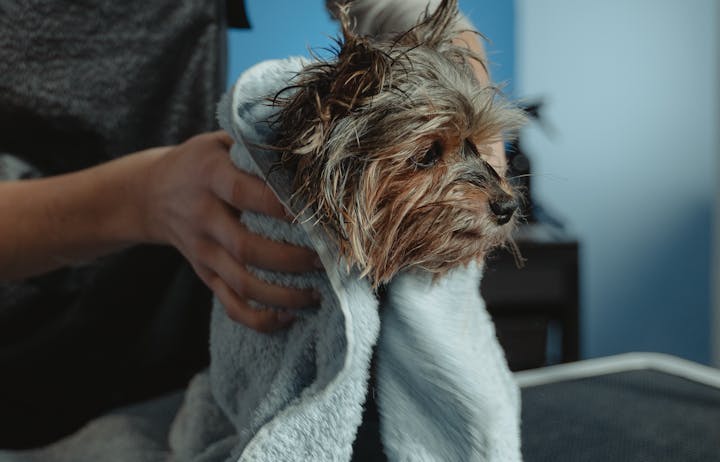
The practical answer
A smell that persists once the coat is dry, repeatedly returns or comes with discomfort needs investigation. Notice where it is strongest; odour alone cannot identify an infection or its cause.
First, check the whole bathing setup
Was the coat rinsed thoroughly? Is dense hair still damp beneath the surface? Are towels, bedding or a fabric collar holding an old smell? These are useful checks because they can change what you do next without jumping to a medical conclusion.
Locate the area without irritating it
| Where you notice it | Useful next step |
|---|---|
| Across a damp coat | Check drying and clean the towels or bedding before judging the result. |
| Around an ear | Look for head shaking, redness or discharge and arrange veterinary advice if present. |
| Around the mouth | Note bad breath or changed eating and book a dental assessment. |
| At a skin fold or paw | Check for soreness, dampness or licking; avoid masking it with perfume. |
| Around the bottom | Tell the vet about scooting, licking, swelling or discharge. |
Do not diagnose by the smell
Descriptions such as musty, sweet or fishy may help you explain what you noticed, but they do not reliably identify bacteria, yeast or an anal gland problem. PDSA advises veterinary assessment when a dog shows symptoms of anal gland trouble. Do not squeeze the glands as a home troubleshooting step. PDSA: anal gland problems.
Review the rinse and dry
Follow the shampoo label, including any dilution or contact time, and rinse methodically. Check areas that are easy to rush, such as under the chest and around the legs. Use a drying method matched to the dog’s coat and tolerance; the AKC discusses drying as a separate part of coat care. American Kennel Club: drying your dog safely.
After the dog is dry, note whether the smell has changed. If it returns quickly, keep a brief record of timing and location instead of repeatedly switching products. That record is useful to a vet or groomer and avoids treating every recurrence as proof the bath was inadequate.
When to ask the vet
- Odour accompanied by pain, redness, discharge or persistent itching.
- Repeated head shaking or discomfort around the ears.
- Bad breath with difficulty eating or mouth pain.
- Scooting, swelling or soreness around the bottom.
- A smell that keeps returning despite an appropriate care routine.
What to tell the appointment team
- When the odour started and where it is strongest.
- Whether it changes once the dog is fully dry.
- The products used and any recent changes.
- Associated licking, scratching or discomfort.
- Any relevant treatment already prescribed.
Read next
- Ear Care After Baths and Swimming: What to Check
- How Often Should You Bathe Your Dog? Build the Right Routine
- Sensitive Skin or Something More? Grooming Clues to Record
Sources and further reading
Guidance checked September 2026. The practical checklists and examples are VUNRO editorial guidance; the sources below support the underlying care or equipment principles.
Keep learning
More from the Blade Blog
Measure Shampoo Dilution Without Ambiguous Ratios
Read the guide →
The Dilution-Bottle Problem: What Grooming-Product Cultures Found
Read the guide →


