

Double Dewclaws: How to Check and Care for Them
Find the extra claws that are easy to miss, recognise damage and build them into your dog’s regular paw checks.

The practical answer
Double dewclaws can be normal for some dogs. Count and check each claw individually; do not assume every nail wears down during walks or that an extra claw needs removal.
What are double dewclaws?
Dewclaws sit higher on the inside of the leg than the main toes. Some dogs have rear dewclaws, including pairs on the same leg. The American Kennel Club identifies rear double dewclaws in breeds such as the Great Pyrenees, Briard and Beauceron. Their presence alone does not indicate a grooming problem. American Kennel Club: dog dewclaws.
Make a paw map
At the first appointment, gently locate every claw and record the number on each foot. Hair can hide a small additional claw, and the two sides may not look identical. A quick note in the grooming record stops a less obvious nail being missed at the next visit.
- Choose a calm moment and good light.
- Support the leg comfortably without pulling it into an awkward position.
- Part the hair enough to see each claw and the surrounding skin.
- Look for curling, splits, snagging or contact with the skin.
- Stop if the dog guards the area or you find pain, swelling or bleeding.
Nail length is only one part of the check
| Finding | Next step |
|---|---|
| A claw is long but the skin looks comfortable | Ask a groomer or veterinary nurse to assess and demonstrate a suitable trim. |
| A claw is curling towards the skin | Arrange attention promptly rather than waiting for the next full groom. |
| A split or partly torn claw | Contact the vet; do not pull away the damaged part. |
| Bleeding, swelling, discharge or marked pain | Seek veterinary advice promptly. |
| A loose-looking attachment with no symptoms | Have the anatomy assessed if unsure; do not assume it can be removed or trimmed differently. |
Trim only within your skill level
Use suitable dog nail clippers and a controlled, comfortable setup. If you cannot identify how much can safely be removed, get a demonstration rather than guessing. PDSA recommends relaxed handling and professional help when home nail clipping is difficult. PDSA: clipping your dog’s nails.
Keep removal separate from grooming
Whether a dewclaw needs a medical procedure is a veterinary decision. Repeated snagging or injury is a reason to discuss the dog’s individual circumstances, not an instruction to remove an otherwise healthy claw. For routine care, your job is to notice changes and keep the nails on the same inspection list as the rest of the feet.
Remember at every paw check
- All four feet, including the higher claws.
- Each claw in a pair checked separately.
- The skin around the nail as well as its length.
- Any new licking, guarding or snagging recorded.
Once a professional has shown you an appropriate trim, compare VUNRO nail tools for that task. A painful or injured claw needs veterinary attention first.
Read next
- Black Nails, Dewclaws and Nervous Dogs: A Calmer Nail Routine
- Paw Care Between Grooms: Nails, Pad Hair and Licking
Sources and further reading
Guidance checked September 2026. The practical checklists and examples are VUNRO editorial guidance; the sources below support the underlying care or equipment principles.
Keep learning
More from the Blade Blog
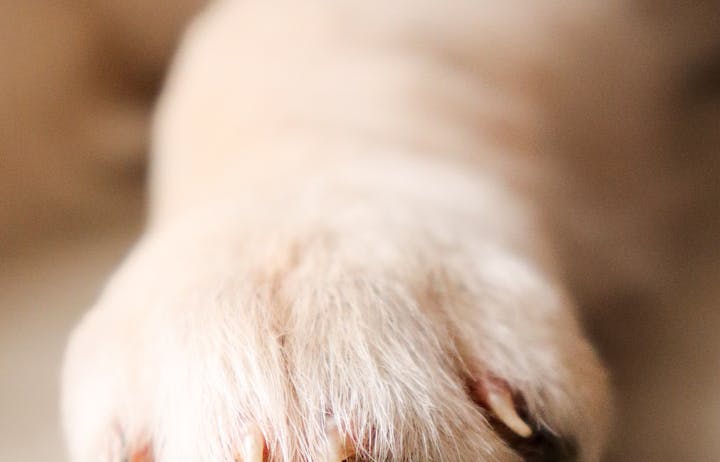
Paw Care Between Grooms: Nails, Pad Hair and Licking
Read the guide →


